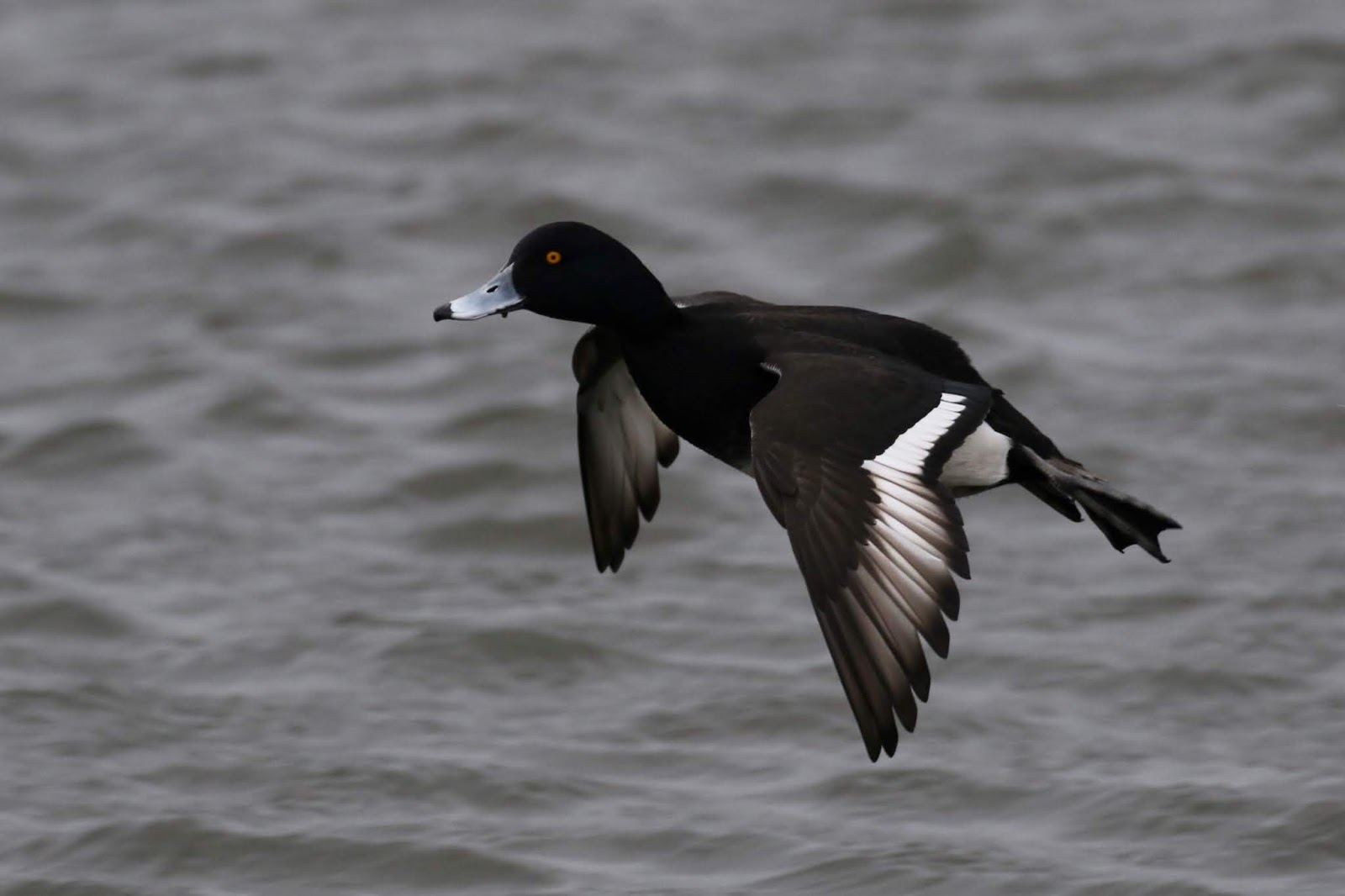
After moving to Hamilton, Ontario in the Summer of 2020 I soon started exploring Bayfront Park as a birding patch close to home and, conveniently, on my way to work. I wasn't too excited by the park at first (in fact it took me 4 months of living here before I started visiting the park regularly).
In 2022 I made a total of 224 visits to the park. The frequency of my visits is largely thanks to the fact that the park is more or less on my way to and from work, and that I haven't been driven to twitch rarities for my Hamilton or Ontario lists. In the end I inadvertently did a Bayfront Park big year.

Bayfront Park is on Hamilton Harbour, which is at the far West end of Lake Ontario.

The park is at the Southwest corner of the harbour. It is heavily used by pedestrian traffic, and in 2022 became a campsite for many homeless individuals.

The park itself is a natural piece of land that extends into the harbour. The red lines indicate my unofficial area for the Bayfront Park eBird hotspot. However, I follow eBird rules meaning if I see a bird while I am within the boundaries of the red lines - even if the bird is a long ways away - I can still count it.
.jpg)
A legend of some of the key locations:
1: Best spot to lake watch and watch hawk migration along the North shore of the harbour
2. Small marshy area where things like Swamp Sparrow and N Waterthrush were found
3. Beach that is a good spot for roosting geese at night and disappointing for shorebirds
4. Easily the best area for sparrows and flycatchers
5. Best spot for the remaining passerines that includes a small cul-de-sac that allows a direct view into the canopy
Here are the results of the unofficial big year:
Life: 196 species, 395 visits.
Prior to 2022 the park had 196 species on the eBird list from 1397 eBird checklists.
This year alone, 194 species were reported from the park from 531 lists.
The rarest three birds of the year were:
Glaucous-winged Gull - 6 Jan 2022 (originally found in Barrie in early December)
Yellow-crowned Night-heron - 26 July 2022(originally found at La Salle park a couple weeks prior)
Great Cormorant - 20 Dec 2022 (likely the same individual from Ajax in October)
Interestingly, all three were re-finds from various other locations.
I wonder how many other parks in the province had 3 OBRC-level rarities in 2022?
Patch-birding is easily the most satisfying form of birding, in my opinion. It's a wonderful way to get to know your local species very well and feel the pulse of migration literally every month of the year. It's also one of the easiest ways to find rare birds.
Here are some of the monthly highlights:
The year started off with the rarest bird of the entire year on January 6th. A Glaucous-winged Gull which was previously seen in Barrie during early to mid December of 2021. This was the first record for Hamilton county on eBird and for the beloved Hamilton Study Area that many birders seem use.

It was later re-found in Brantford by Sarah Lamond. Thousands of gulls use Hamilton Harbour as a site to roost overnight before commuting ~37km to Brantford area to feed for the day. There have been many gulls identifiable to the individual level that have been documented at both sites including Common Gull, this gull, and various aberrant gulls. Once things froze over in mid January this Glaucous-winged was relocated in Pennsylvania!
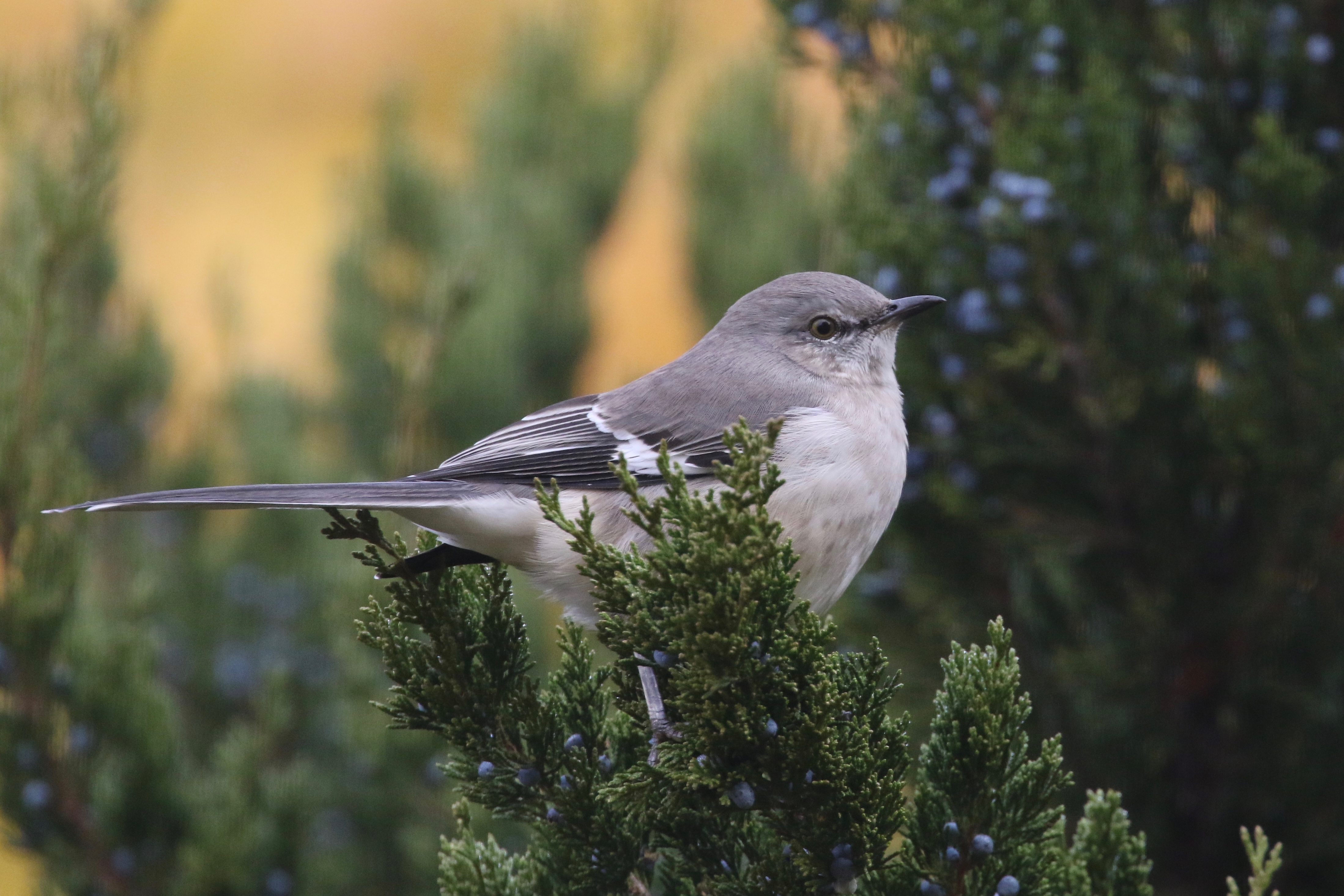
A year-round resident is the Northern Mockingbird, even in the depths of February. There are at least two pairs in the area. They are a constant presence with their funky calls and varied vocalizations.
Soon enough the ice was breaking up again and Spring wasn't far away.

The mammal list for Bayfront Park is pretty small. Squirrels, red fox, coyotes, this opossum, racoons and I'm sure a couple more that I'm forgetting now.

Many March and April sunrises were spent staring at this view picking out blackbirds, and bluebirds migrating North. It proved to be a great spot for early Spring migration with 10+ Meadowlarks on some mornings and one Eastern Bluebird in late March.

An early April highlight was this Forster's Tern that stayed in the area for a week or more:

Common Loons are uncommon in Hamilton Harbour:

A regular April arrival are Fish Crows. I have found breeding evidence including collecting nesting material but have never found a nest site. Surely they do nest in the area somewhere:

By early May many species are well on their way into the breeding season:

And at the same time, boreal species are flooding past on their way North:


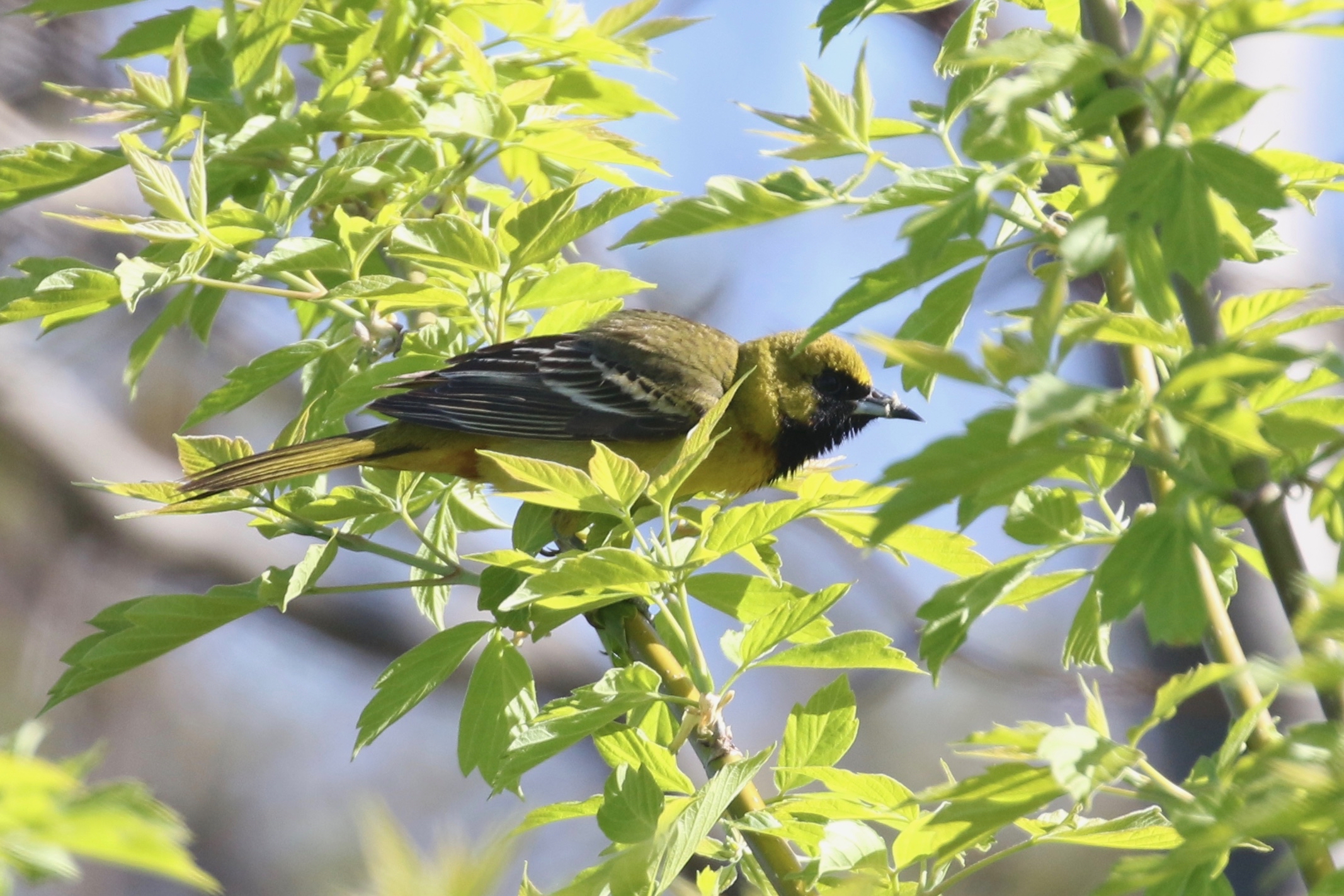
One species I missed this year was Orchard Oriole even though they breed nearby and very likely bred here in 2021. Likely largely a result of the fact that I wasn't able to visit the park much in June.
By July some northern species are already starting to migrate South including this juvenile Least Sandpiper:

Black-crowned Night-herons start haunting the park in August after finishing up breeding duties nearby:

The August highlight was this Yellow-crowned Night-heron that was in the area for a couple weeks:

September was just around the corner. Highlights were a Whimbrel that roosted on the shores of Hamilton Harbour for about a week and made a daily sunrise commute South over downtown Hamilton to some unknown feeding spot. Another highlight was a Gray-cheeked Thrush that turned into two individuals that stayed for a few days before flying South to Colombia.
https://macaulaylibrary.org/asset/485241331
Soon it was time to start watching the daily commute of gulls to and from the harbour:

Many sunrises were spent watching the harbour for visible migration:

Others were spent in the densest of fogs!

Never a dull sunrise!

A surprisingly rare species for the park is Red-bellied Woodpecker. They are common in many forested areas of Southern Ontario including Hamilton. It took a major movement of these guys for me to get one for the park - it was a brief flyover so I have included a photo from a different time and location:

October is probably the month with the highest diversity for the entire year. Surprisingly I didn't find anything new for my personal life list or the park in that month:

The hoards of American Coots start returning in October:

Soon the leaves were starting to turn colour:

An early November highlight was hearing an Evening Grosbeak from the park. Another irruptive species that was passing through Southern Ontario in big numbers.

These two young dark Snow Geese were found at the park for a few days in mid November:

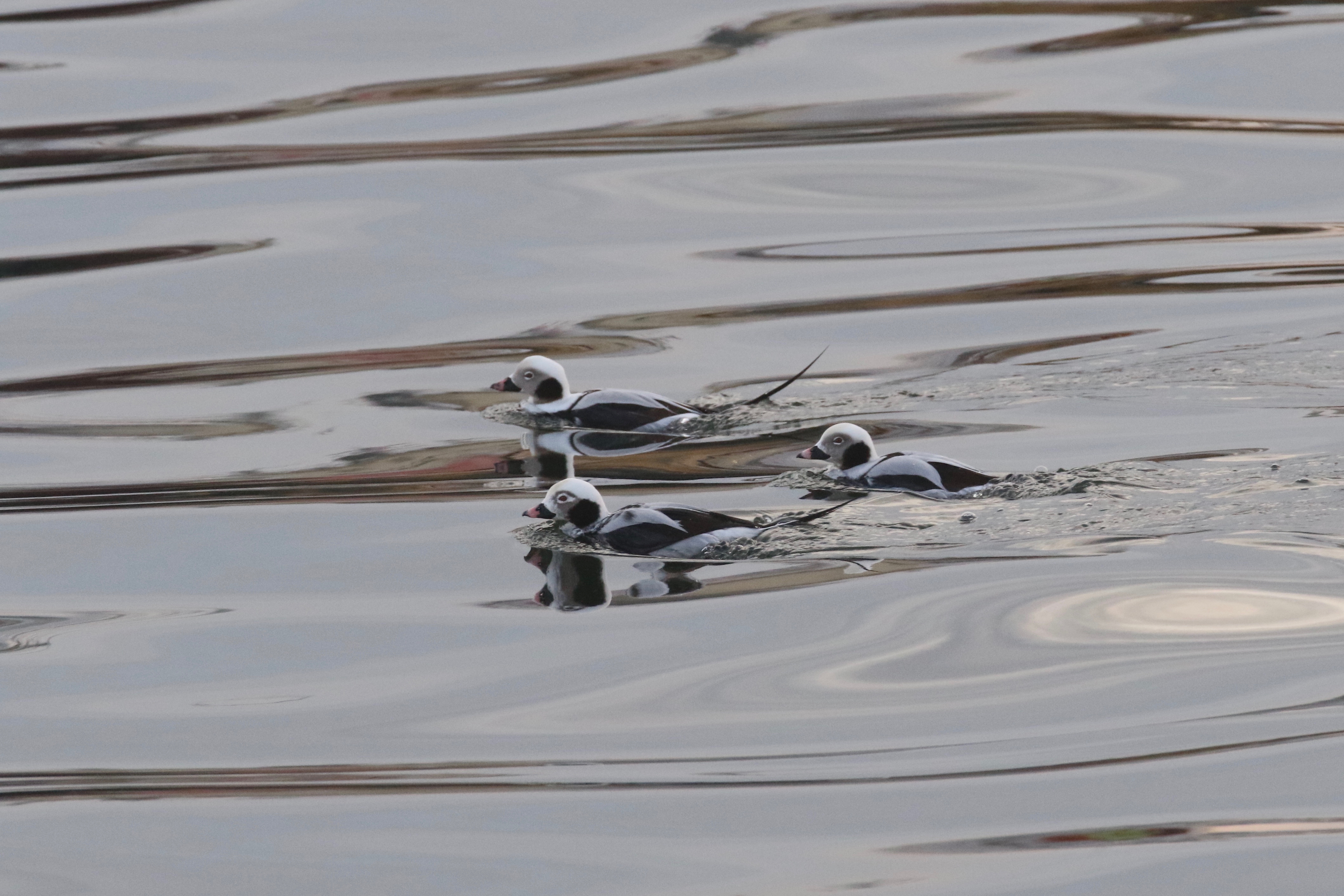
By December the true Northern species started arriving including one of my personal favourites - the Long-tailed Duck:
Things froze up pretty quickly with the late December "bomb cyclone""

And with it came the true high arctic species like this Glaucous Gull:

My very last visit to the park on 28 December revealed one of the rarest species of the year. This Great Cormorant which had been in the harbour for over a week but went missing for the Christmas Bird Count. It was hiding among thousands of waterfowl:
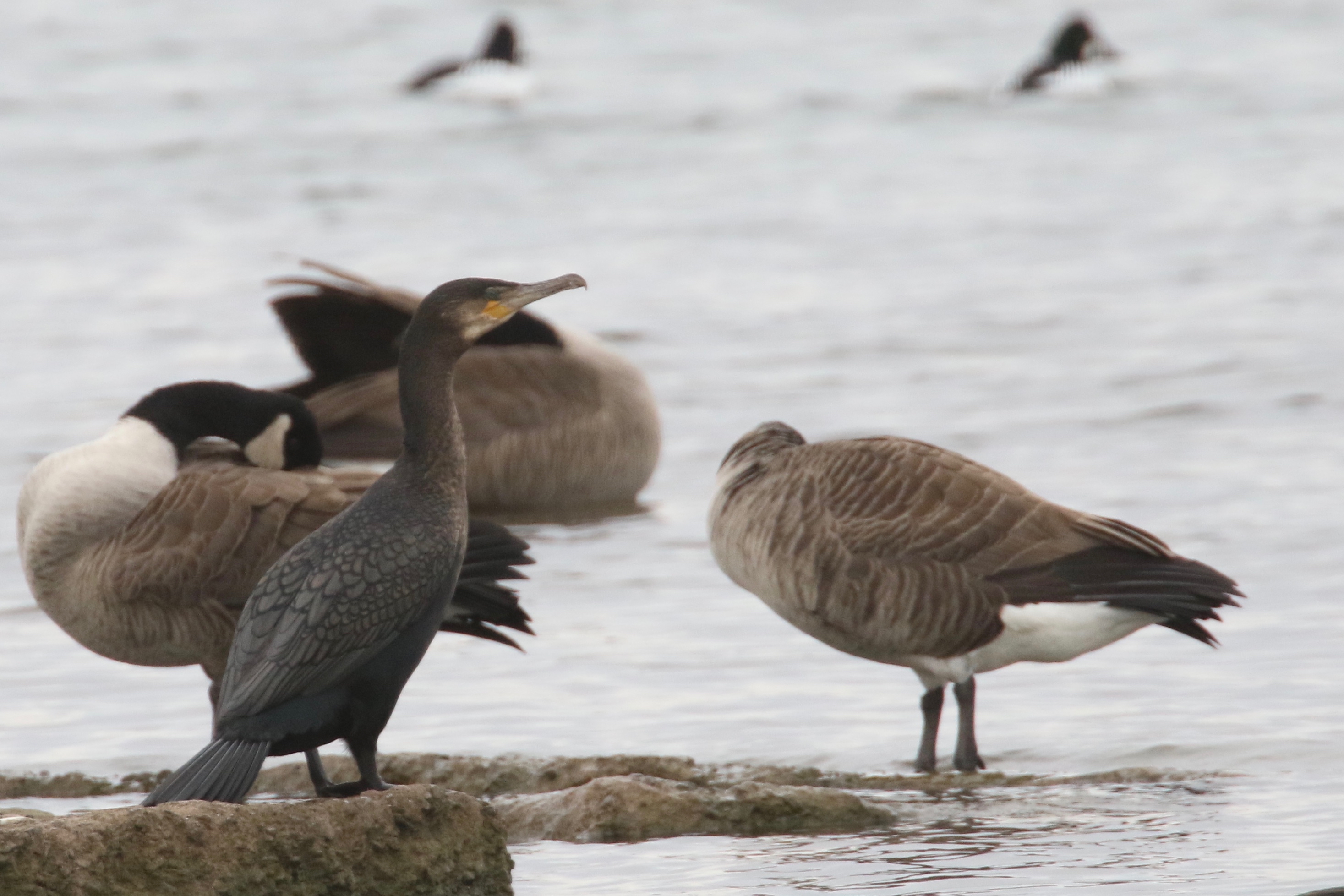
Something beautiful about these dreary winter scenes:

That brings us to the end of the calendar year! I have less than 6 months remaining in Hamilton before moving on for work. I'm hoping to add another 4 species to my Bayfront Park list so round things out at 200+
There are only 3 eBird hotspots in Hamilton county where an individual person has seen 200+ species: the Dundas Marsh/Cootes Paradise general location, Windermere basin, and Valens Conservation Area. There's no limit to the ridiculous statistics we can look at as birders!
There are a handful of gettable species that I have managed to avoid so far. These include Sandhill Crane (should be visible as a migrant overhead), Greater White-fronted Goose, Eastern Screech-owl, Indigo Bunting, Scarlet Tanager and many more.

Visiting Bayfront Park soon?